Business Waste Removal in Kilburn

Business waste removal in Kilburn helps offices, shops, hospitality venues and managed premises keep working spaces clear, presentable and easier to run. Our service covers routine collections, one-off clearances and the removal of mixed commercial waste that needs sorting before disposal. We focus on practical, lawful handling of rubbish, with attention to reusable materials, recyclables and items that require separate treatment.
For many organisations, the real value lies in keeping waste under control without interrupting trading, deliveries or staff movement. Clear access routes, sensible loading and tidy removal matter as much as the disposal itself. We work across common commercial waste streams, including packaging, general office refuse, redundant fixtures, broken furniture and other accumulated items that take up useful room. Our business waste removal service is set out for customers who want a straightforward way to arrange the work in advance.
If you need waste cleared from a workplace, storage area or shared commercial premises, the next step is simple: send your details and request a quotation. You can also use the information on this page to decide which service route suits the type of waste you have, whether that means a single collection, a phased clearance or a more structured removal plan.
Commercial collections arranged around your premises
Every business produces different waste in different volumes, so the collection method needs to suit the site rather than the other way around. We deal with day-to-day commercial rubbish as well as accumulated material that has built up after refits, storage changes or general workplace tidying. Where items are bulky or awkward, the aim is to remove them safely and keep disruption low. That includes planning access, deciding what must be separated and identifying anything that may need a specialist route.
Useful preparation is usually straightforward. Have a rough idea of the waste types, the amount involved and where the items are located, then share any access limits that could affect collection. If you already know that some items are confidential, heavy, contaminated or mixed with other materials, mention that early so the removal can be organised properly. A clear description helps us quote accurately and decide whether the work needs more than a simple lift-and-load approach.
For many customers, the choice comes down to whether the waste is largely general and bagged, or whether it includes furniture, appliances, fixtures or mixed material that needs closer handling. When the load is properly described, the collection can be planned with the right vehicle capacity and disposal route. Our waste removal options cover broader clearances where the contents are not limited to one single category. Pricing and quotes information is also available if you want to understand what affects the final figure before you book.
Office waste and workplace clearances

Office waste often includes a mixture of paper, packaging, old files, worn-out chairs, desks, shelving and miscellaneous items from reorganised work areas. A careful clearance keeps the workplace usable while removing items that no longer serve a purpose. Where staff areas, storage cupboards or meeting rooms have filled up with redundant material, clearing them in a planned sequence can be more efficient than trying to handle everything at once.
We also handle situations where office waste is not just general rubbish. Some premises need items separated before disposal, particularly when there is confidential material, mixed recyclable waste or equipment that should not go into a standard bin stream. If you are dealing with records, storage boxes or documents that require secure treatment, a specific route is available through confidential shredding. That helps keep sensitive paper waste distinct from ordinary office clearance.
What office customers usually want from the service
The most useful outcomes are usually practical rather than dramatic: better floor space, less clutter around workstations and easier access for staff, cleaners or contractors. Many workplaces also benefit from separating reusable furniture from general refuse, since not every item needs the same disposal route. When you want a broader clear-out rather than a simple bin emptying, our team can remove office contents in a way that supports day-to-day operations and avoids unnecessary handling.
Furniture, fixtures and bulky item disposal
Businesses regularly end up with furniture that is no longer suitable for use but is too large for ordinary disposal. That may include desks, tables, reception seating, cabinets, shelving, office chairs or other bulky items that need to be carried out carefully. The right removal method depends on the material, the access route and whether the furniture is intact, dismantled or mixed with other rubbish. Furniture clearance is useful when the items form part of a wider clear-out rather than a single piece.
Some items also call for a more specific disposal route. Fridges, display units, kitchen equipment and other appliances should not be handled in the same way as general furniture, because the contents and materials may differ. For those cases, fridge and appliance removal offers a more focused solution. Likewise, certain chairs and sofas need specific handling because of size, material composition or the way they are built, which is why mattress and sofa disposal can be relevant where that is the main item type.
When bulky items are part of a larger clearance, it helps to identify the pieces that are to be removed and any that must stay in place. That keeps the process orderly and reduces the chance of confusion in shared or busy premises. It also allows the quotation to reflect the actual work rather than a vague estimate based on guesswork. Accuracy at the point of enquiry is usually the simplest way to keep the job efficient and the collection well matched to the load.
Recycling, sorting and responsible handling

Commercial waste is rarely all the same, even when it appears to be a single pile. Mixed waste often contains cardboard, plastic, metal, wood, fabrics, paper and items that need to be separated before disposal. Good sorting helps keep recyclable material away from general rubbish and makes it easier to handle items in a lawful, sensible way. Recycling and sustainability information explains the approach to material recovery and responsible handling in more detail.
Some waste streams need extra care because of contamination, sharp edges, breakage risk or the nature of the contents. Hazardous material, if present, must be identified before any clearance is arranged. That includes substances or items that cannot simply be mixed with standard commercial waste. Where appropriate, hazardous waste disposal provides the route for material that should be treated separately. This is not a category to leave for later guessing; it is best mentioned as soon as you know it may be involved.
Responsible handling also applies when customers are clearing working areas that contain still-useful material alongside waste. It is often more efficient to separate what can be reused, recycled or retained before the removal begins. That makes the process easier to manage and reduces unnecessary disposal. If your premises generate ongoing waste rather than a one-off pile, a planned collection arrangement may be the better option than waiting for space to run short.
Clearance for fit-outs, refits and building-related waste
Workplace changes often create waste that is different from routine office rubbish. Fit-outs, refurbishments and maintenance projects can leave behind timber offcuts, packaging, old fittings, redundant furniture and other debris that needs removing quickly and in the right sequence. Builders waste clearance is a relevant option where the material comes from works rather than normal commercial operation, particularly if the load includes mixed construction waste.
These clearances can include items removed from shop floors, back-of-house rooms, stock areas or small commercial refurbishments. The point is not simply to empty the space, but to do so with attention to access and the kind of waste being handled. One collection may deal with a single room, while another might involve staged removal from several areas. If the waste includes broken fittings, wood, plasterboard or packaging, describing those materials clearly helps the team arrive prepared.
There can also be overlap between a building-related clearance and a broader business waste job. For example, a refit may leave office furniture, old fixtures and general rubbish in the same premises. Rather than splitting the work into unnecessary pieces, it is often more practical to set out the main categories at quotation stage and decide which service route is the best fit. That keeps the job focused and reduces the risk of items being left behind.
Planning access, timing and waste quantities
Good planning matters because commercial premises often have constraints that domestic jobs do not. Access may be shared, lifts may need protecting, loading areas may have limits and working hours may be restricted. The more clearly the site is described, the easier it is to plan the removal without causing avoidable disruption. It also helps to know whether the waste is stored in one place or spread across several rooms, since that affects handling time and loading arrangements.
A useful quotation usually depends on three things: what needs to go, how much there is and how easy it is to reach. If items are boxed, bagged or stacked neatly, that may be simpler than loose mixed material. If they are on upper floors, behind locked doors or in a shared area, those details matter too. You do not need to write a full inventory, but a concise description is helpful, especially when the waste includes several types of material that should not be treated as one generic load.
- Note the main waste categories, such as furniture, office rubbish or mixed commercial items.
- Explain whether access is straightforward, shared, restricted or time-sensitive.
- Mention anything heavy, awkward, confidential or requiring separate handling.
About Kilburn

Kilburn is a long-established district in northwest London that stretches across parts of the City of Westminster, the London Borough of Brent and the London Borough of Camden. The name is found in medieval records and is generally linked to the River Westbourne, which was once known as the Kilburn Brook. Over time, settlement expanded along the main roads and around transport routes, and the area developed a layered character that combines residential streets, local shopping frontages and busy urban connections. Kilburn High Road remains one of the best-known thoroughfares, lined with a mix of commercial premises, everyday services and older buildings that reflect the district’s gradual change from rural edge to inner-London neighbourhood.
The area is also notable for its transport and cultural variety. Kilburn High Road station sits on the Mildmay line, while nearby underground and rail links connect the district to wider parts of London. Streets around the centre show a varied architectural mix, from Victorian terraces and mansion blocks to later infill buildings. The district’s social history has been shaped by successive waves of migration, commerce and entertainment, with venues, places of worship and local institutions contributing to a distinct identity. Kilburn Grange Park provides open green space, while the wider neighbourhood sits close to larger routes such as the Edgware Road corridor and the approaches to Maida Vale and West Hampstead, giving the area a busy but recognisable urban character.
Public life in Kilburn is reinforced by its markets, cultural venues and independent shops, as well as the strong presence of local high-street activity. The area’s buildings and street patterns tell the story of continual adaptation, with older plots reused for modern purposes and commercial frontages changing over time. That sense of change is part of the district’s character: it is a place where residential streets, main-road commerce and transport links sit close together, creating a dense but practical urban environment. For a visitor, the district is best understood through its mixture of scale and history rather than by one single landmark, since its identity comes from the layering of streets, uses and communities across the wider area.
Housekeeping for business premises
Once waste has been removed, many customers want a simple way to keep the space from filling up again. That may mean separating regular rubbish from bulky items, setting a collection rhythm that suits the premises or dealing with occasional clear-outs before the accumulation becomes difficult to manage. The aim is not to overcomplicate the process, but to make waste handling part of a sensible routine that fits the way the business works.
Different premises generate different waste patterns. Retail stock rooms, offices, hospitality back areas and shared buildings all tend to create a mix of packaging, disposables, worn equipment and general clutter. A clear distinction between ongoing refuse and larger disposal jobs can make the site easier to maintain. When an area needs a fuller clearance, it is often better to remove everything in one organised visit rather than tackle it piecemeal and leave the room half-finished.
Where mixed waste includes items that may still have value, such as reusable furniture or serviceable equipment, those objects should be identified before removal starts. That way the load can be separated properly and the quote can reflect the actual contents. About us gives further background if you want to see how the business presents its broader service range. If you are ready to move on, make your request for a quotation and we will take it from there.
Specialist items and disposal decisions
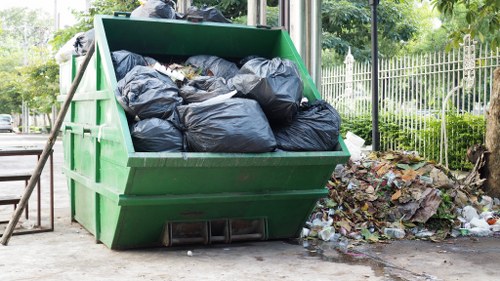
Some commercial waste calls for an item-by-item decision rather than a general lift. That is especially true when the load contains appliances, confidential papers, awkward furniture or material that could not safely be mixed with ordinary rubbish. In those situations, the question is not just what can be taken away, but what should be separated first so it can go through the correct route. It helps to think of the clearance as a sequence of decisions, not merely a single collection.
Businesses often also need to think about where waste originated. A storeroom clear-out may contain a different mix from a staff-room refresh or an office relocation. Reducing the waste to one vague category can make the quotation less accurate and the collection less efficient. By naming the main item types and flagging anything unusual, you make it easier to match the job to the right disposal method. That is especially useful for repeat customers with changing loads and mixed material over time.
Contact us to request a quotation for business waste removal in Kilburn, or use the service information above to decide whether a broader clearance, a furniture-focused job or a more specific disposal route is the better fit. The clearest enquiries are usually the easiest to price, so a short description of the waste, access and timing is enough to begin.